Dalarna, central Sweden
Älvdalen quartzite
Warm in colour, uncompromising in use. A red, veined quartzite from Mångsbodarna that has clad civic buildings in Sweden and abroad for more than a century.
Geology
Sand, iron and time
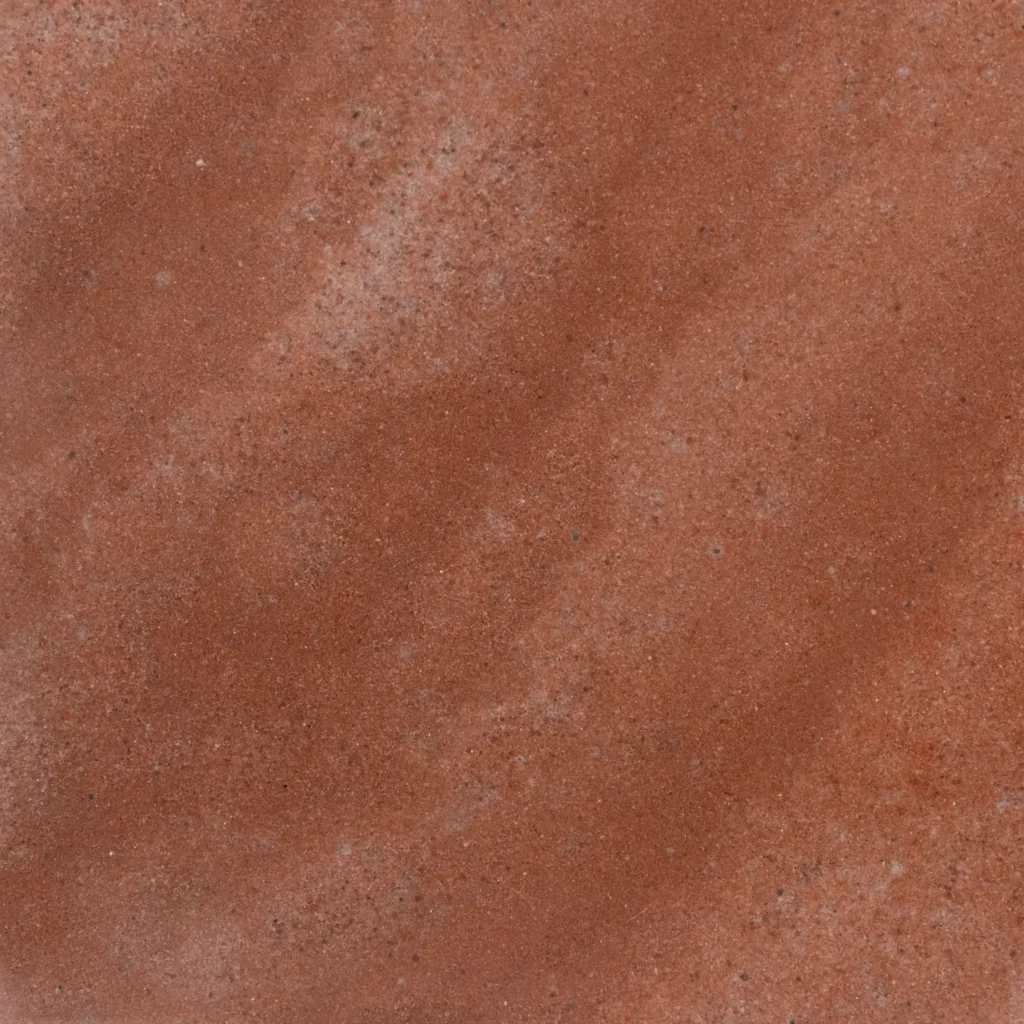
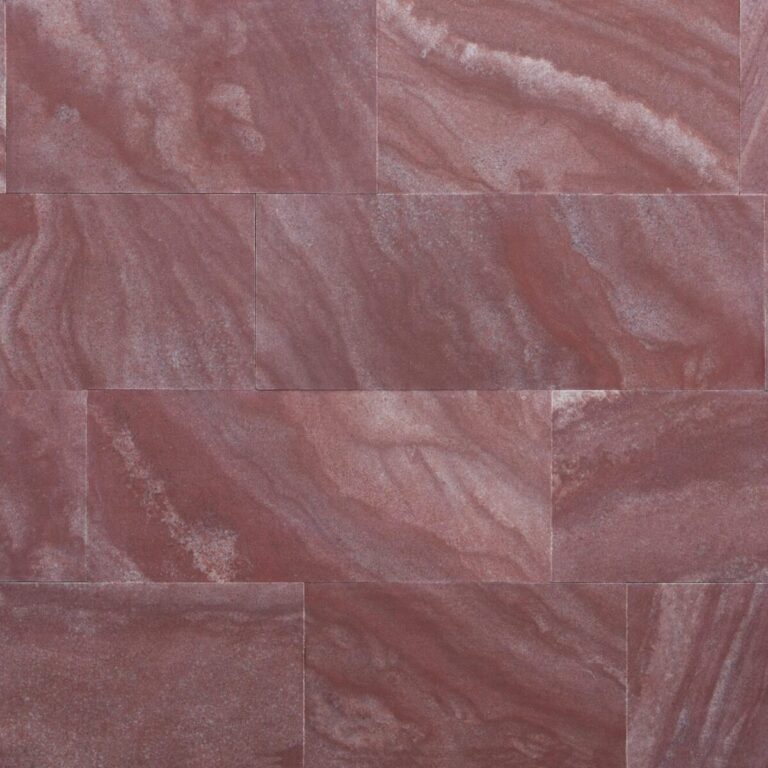
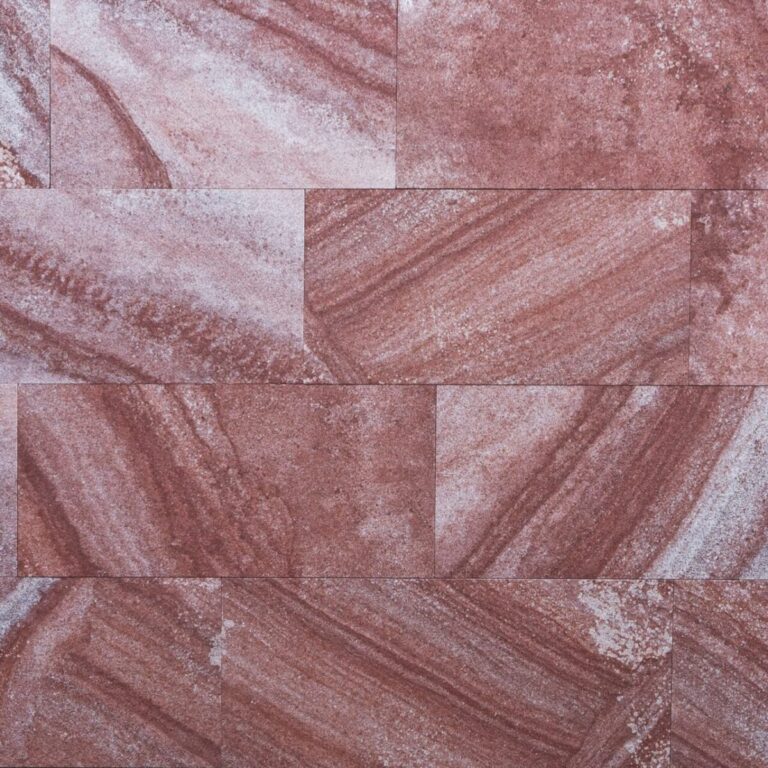
About 1.4 billion years ago, sand settled in flowing water on an ancient sea floor. Iron in the sediment oxidised and turned it red; the angle of the sea bed set the banding. Later metamorphism welded the grains into a dense quartzite.
The deposit at Mångsbodarna in Älvdalen runs deep, towards the Norwegian border, and has been quarried industrially since the early twentieth century. The result is a stone that combines a warm palette, from pink-red to deep red-brown, with a hardness few decorative stones can match.
One of the world's hardest stones
Quartzite is almost pure quartz, a mineral of Mohs hardness 7, which puts it among the hardest natural stones used in building anywhere. Älvdalen quartzite ranks among the hardest rocks in Sweden. An abrasion value of 15.1 mm (EN 14157) is what that means in practice: treads and floors that keep a crisp arris after decades of use.
A place in Swedish history
Mångsbodarna lies an hour's drive through the forest from Mora, on the route that, according to tradition, Gustav Vasa skied in 1521 as he set out for Norway, the route now followed by the Vasaloppet ski race, which passes Mångsbodarna. Quartzite has been quarried here industrially since the early twentieth century and is still worked by a local stonemasonry with a century of experience.
Where you will find it
Älvdalen quartzite clads Uppsala City Hall and the PK building in Stockholm, paves Alviks torg in Stockholm and the pedestrian street in Mora, and has been used abroad, for example at the city library in Dortmund, Germany, and on buildings in Switzerland.
Choosing a finish
- Natural cleft: rustic and grippy, for walls and landscaping
- Flamed or bush-hammered: for paving, block steps and stairs
- Honed: smooth and matt, brings out the veining on floors
- Polished: deepens the red for interiors and facade details
Test data
Key values
| Flexural strength, EN 12372 | 16.1 MPa (LFV), mean 19.8 MPa | |
| Compressive strength, EN 1926 | 227.6 MPa (LFV) | |
| Water absorption, EN 13755 | 0.15 % | |
| Apparent density, EN 1936 | 2,622 kg/m³ | |
| Slip resistance, EN 14231 | 70 SRV wet, 83 SRV dry (honed) | |
| Abrasion, EN 14157 | 15.1 mm | |
| Frost and de-icing salt, TL Pflaster StB 06 | 0.01 % mass loss after 25 cycles |
Questions about Älvdalen quartzite
Is Älvdalen quartzite a granite?
No, it is a quartzite, a metamorphosed sandstone. In construction it is classed as a silicate stone with properties close to granite.
Does it resist frost and de-icing salt?
In 25 cycles in salt solution to the German TL Pflaster StB 06 method, mass loss was 0.01 % with no visible change. The report is available on request.
Is Älvdalen quartzite radon free?
Yes, it is described as radon free and is unaffected by temperature swings and air pollution.
Why does the colour vary between slabs?
The red comes from iron in the original sand beds and the banding from how the sand was laid down, so tone and pattern change from slab to slab.
Samples and quotes
Hold it in your hand
Samples in natural cleft, flamed, honed or polished.